HSK-old
- Từ vựng HSK 1
- Ngữ pháp HSK 1
- HSK 1_old
- HSK 2_old
- HSK 3_Old
- HSK 4_old

What is the capital city of China?
最新调查显示,美国中学生使用AI学习的比例快速增加。去年每100个13到17岁的学生中,只有13人使用ChatGPT辅助学习,今年这个数字已经翻倍达到26人。这意味着每四个高中生里就有一个在使用AI工具,显示出AI正在成为新一代的学习伙伴。 数据显示,高年级学生使用AI的比例明显更高。31%的11至12年级学生经常使用ChatGPT辅助学习,而9至10年级学生比例为26%,7至8年级学生则为20%。专家指出,随着课程难度增加,学生更需要智能工具帮助解决复杂问题。这种现象不仅出现在美国,其他国家教育领域也观察到类似趋势。 学生对AI的认知程度直接影响使用频率。调查发现,79%的青少年知道ChatGPT,比去年增长12个百分点。其中32%的学生对AI工具有深入理解,这些学生中有56%会主动将AI用于学习,而普通了解者的使用率只有18%。这证明掌握AI知识的学生更善于利用技术提升学习效率。 值得注意的是,青少年在使用AI时展现出理性判断。超过半数学生认为AI适合用来研究新课题,但只有18%的人认可用它写完整的作文。近三成学生接受用AI解答数学题,但同样比例的人明确反对这种做法。这种选择性使用表明,年轻一代正在为AI工具划定清晰的使用边界。 S EV N wǒ shì xuéshēnɡ. 我 是 学生。 教育工作者面临新挑战。研究发现,过度依赖AI可能导致学生思考能力下降。美国得克萨斯州的AlphaSchool尝试创新教学模式,每天仅用两小时通过AI教授知识,其余时间专注培养生活技能。该校90%学生的考试成绩超过全国平均水平,学习速度是传统课堂的两倍,这证明合理使用AI能提升教育质量。专家建议采取平衡策略:既要教会学生利用AI提高效率,也要设计独立思考训练。例如要求学生在使用AI解答后,必须用自己的语言复述解题过程;或者安排需要人机协作的实践项目。教育机构需要建立新标准,既要防止技术依赖,也要发挥AI的辅助作用,帮助学生在智能时代培养核心竞争力。 最新调查显示,美国中学生使用AI学习的比例快速增加。去年每100个13到17岁的学生中,只有13人使用ChatGPT辅助学习,今年这个数字已经翻倍达到26人。这意味着每四个高中生里就有一个在使用AI工具,显示出AI正在成为新一代的学习伙伴。 [...]

Learning Chinese HSK 4 Lesson 1: Simple love
1. 不仅………………也/还/而且……………… “不仅”,连词,用在第一个分句里,第二个分句里常用“也/还/而且”相呼 应,表示除第一个分句所说的意思之外,还有更进一层的意思。当两个分句的主 语相同时,“不仅”在主语后;当主语不同时,“不仅”在主语前。例如: The conjunction“不仅” is used in the first clause, often followed [...]
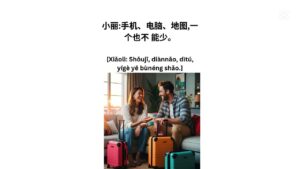
Learning Chinese HSK 3 Lesson 1-4: Preparing for their trip
准备去旅游 [Zhǔnbèi qù lǚyóu] Preparing for their trip 1. Conversation 小刚:水果、面包、茶都准备好了, 我们还带什么? [Xiǎogāng: Shuǐguǒ, miànbāo, [...]

Learning Chinese HSK 3 Lesson 1-3: Talking about the travel plan
聊旅游计划 [Liáo lǚyóu jìhuà] Talking about the travel plan 1. Conversation 小丽:下个月我去旅游,你能跟我 一起去吗? [Xiǎolì: Xià [...]

Learning Chinese HSK 3 Lesson 1-2: The Negative Structure “………………也/都+不/没………………”
1. Grammar 用“一+ Measure Word+Noun+也/都+不/没+V”表示完全否定。例如: “+ Measure Word+Noun+也/都+不/没+V(not…at all)” indicates complete negation. For example: (1)我一个苹果也不想吃。 [...]

Learning Chinese HSK 2 Lesson 7-4: Confirming a fact and convince someone in an exaggerative mood in Chinese with 呢 – ne
IV. Confirming a fact and convince someone in an exaggerative mood in Chinese with 呢 [...]

Learning Chinese HSK 2 Lesson 7-3: Indicating the distance from a place, moment or purpose in Chinese with 离-lí
III. Indicating the distance from a place, moment or purpose in Chinese with 离-lí 1. [...]
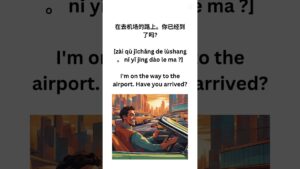
Learning Chinese HSK 2 Lesson 7-2: emphasis the speaker thinks something happen early, went fast and well with 就-jiù
II. Emphasis the speaker thinks something happen early, went fast and well with 就-jiù 1. [...]

Learning Chinese HSK 2 Lesson 7-1: indicating the continuation of an action or state in Chinese with 还 -hái
1. Conversation A:大卫回来了吗? [dà wèi huí lái le ma ?] Is David back? B:没有,他还在教室学习呢。 [méi [...]

Say “Every day” in Chinese
我每天六点起床 [wǒ měi tiān liù diǎn qǐ chuáng] I wake up at six o’clock every [...]

Learning Chinese HSK 2 Lesson 6-4: How to ask about the reason for something in Chinese (Cont.)
I. Ask about the reason for something in Chinese with “怎么+Adj/Verb”, indicating surprise or astonishment. [...]

Learning Chinese HSK 2 Lesson 6-3: expressing Cause and effect in Chinese
III. Expressing Cause and effect in Chinese with 因为。。。所以 因为 + cause+ 所以 + effect [...]

Learning Chinese HSK 2 Lesson 6-2: express “each, every” in Chinese by duplicating measure word
II. Expressing “each, every” in Chinese by duplicating measure word: “天天” mean “every day”, usually [...]
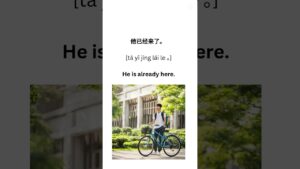
Learning Chinese HSK 2 Lesson 6-1: How to ask about the reason for something in Chinese
I. Ask about the reason for something in Chinese with “怎么+Adj/Verb”, indicating surprise or astonishment. [...]

Learning Chinese HSK 2 Lesson 5-4: How to say it is not good for health in Chinese
IV. Express it is not good for health in Chinese by “对身体不好”。 1. Conversation A:休息一下吧,喝咖啡吗? [...]
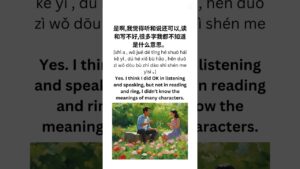
Learning Chinese HSK 2 Lesson 5-3: indicating speaker’s negative mode or complain in Chinese
III. Indicating speaker’s negative mode or complain in Chinese with “有点儿 + Adj”. 1. Conversation [...]
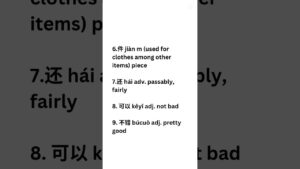
Learning Chinese HSK 2 Lesson 5-2: Expressing something is passable or acceptable in Chinese
II. Expressing something is passable or acceptable in Chinese with “还” ( hái) 1. Conversation [...]
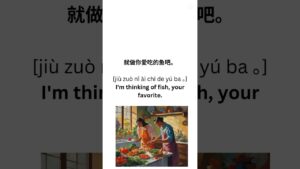
Learning Chinese HSK 2 Lesson 5-1: Indicating the conclusion or resolution made on the basic of what has been mentioned previously in Chinese
I。 Indicating the conclusion or resolution made on the basic of what has been mentioned [...]
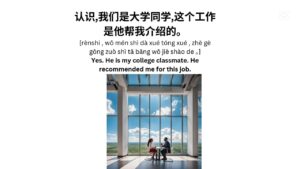
Learning Chinese HSK 2 Lesson 4-4: Indicating an action have been completed or reached a certain degree in Chinese
IV. Indicating an action have been completed or reached a certain degree in Chinese with [...]
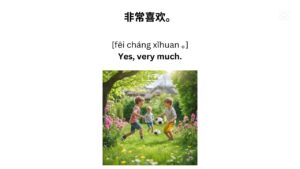
Learning Chinese HSK 2 Lesson 4-3: indicating time in Chinese
III. Indicating time in Chinese with “的时候”。 1. Conversation A:你喜欢踢足球吗? [nǐ xǐhuan tī zú qiú [...]
Learning Chinese HSK 2 Lesson 4-2: How to emphasize the agent of action in Chinese (cont.)
I. Emphasize the agent of action in Chinese with “是。。。的”。 (Cont.) 1. Conversation A:早上 有你一个电话。 [...]
Learning Chinese HSK 2 Lesson 4-1: How to emphasize the agent of action in Chinese
I. Emphasize the agent of action in Chinese with “是。。。的”。 1. Conversation A:生日快乐!这是送给你的! [shēng rì [...]

Learning Chinese HSK 2 Lesson 3-4: talking about position in Chinese
IV. Express position in Chinese with 边 (bian) 1. Conversation A:你看见我的杯子了吗? [nǐ kàn jiàn wǒ [...]

Learning Chinese HSK 2 Lesson 3-3: How to say really, truly, indeed in Chinese
III. Express really; truly; indeed in Chinese with 真 [zhēn] 1. Conversation A: 这是谁的房间? [zhè [...]
 Shop Sách học Tiếng Trung tại Shopee