HSK 2_old

Learning Chinese HSK 2 Lesson 7-4: Confirming a fact and convince someone in an exaggerative mood in Chinese with 呢 – ne
IV. Confirming a fact and convince someone in an exaggerative mood in Chinese with 呢 [...]

Learning Chinese HSK 2 Lesson 7-3: Indicating the distance from a place, moment or purpose in Chinese with 离-lí
III. Indicating the distance from a place, moment or purpose in Chinese with 离-lí 1. [...]
Learning Chinese HSK 2 Lesson 7-2: emphasis the speaker thinks something happen early, went fast and well with 就-jiù
II. Emphasis the speaker thinks something happen early, went fast and well with 就-jiù 1. [...]

Learning Chinese HSK 2 Lesson 7-1: indicating the continuation of an action or state in Chinese with 还 -hái
1. Conversation A:大卫回来了吗? [dà wèi huí lái le ma ?] Is David back? B:没有,他还在教室学习呢。 [méi [...]

Say “Every day” in Chinese
我每天六点起床 [wǒ měi tiān liù diǎn qǐ chuáng] I wake up at six o’clock every [...]

Learning Chinese HSK 2 Lesson 6-4: How to ask about the reason for something in Chinese (Cont.)
I. Ask about the reason for something in Chinese with “怎么+Adj/Verb”, indicating surprise or astonishment. [...]

Learning Chinese HSK 2 Lesson 6-3: expressing Cause and effect in Chinese
III. Expressing Cause and effect in Chinese with 因为。。。所以 因为 + cause+ 所以 + effect [...]

Learning Chinese HSK 2 Lesson 6-2: express “each, every” in Chinese by duplicating measure word
II. Expressing “each, every” in Chinese by duplicating measure word: “天天” mean “every day”, usually [...]

Learning Chinese HSK 2 Lesson 6-1: How to ask about the reason for something in Chinese
I. Ask about the reason for something in Chinese with “怎么+Adj/Verb”, indicating surprise or astonishment. [...]
Learning Chinese HSK 2 Lesson 5-4: How to say it is not good for health in Chinese
IV. Express it is not good for health in Chinese by “对身体不好”。 1. Conversation A:休息一下吧,喝咖啡吗? [...]
Learning Chinese HSK 2 Lesson 5-3: indicating speaker’s negative mode or complain in Chinese
III. Indicating speaker’s negative mode or complain in Chinese with “有点儿 + Adj”. 1. Conversation [...]
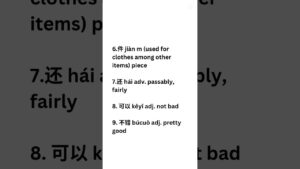
Learning Chinese HSK 2 Lesson 5-2: Expressing something is passable or acceptable in Chinese
II. Expressing something is passable or acceptable in Chinese with “还” ( hái) 1. Conversation [...]
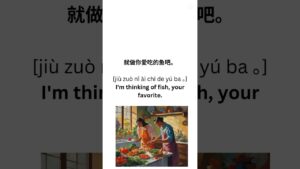
Learning Chinese HSK 2 Lesson 5-1: Indicating the conclusion or resolution made on the basic of what has been mentioned previously in Chinese
I。 Indicating the conclusion or resolution made on the basic of what has been mentioned [...]
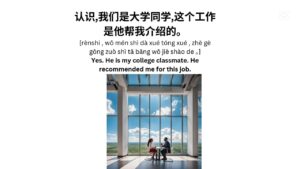
Learning Chinese HSK 2 Lesson 4-4: Indicating an action have been completed or reached a certain degree in Chinese
IV. Indicating an action have been completed or reached a certain degree in Chinese with [...]
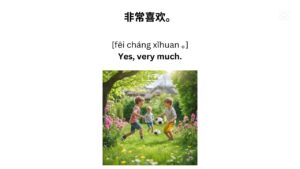
Learning Chinese HSK 2 Lesson 4-3: indicating time in Chinese
III. Indicating time in Chinese with “的时候”。 1. Conversation A:你喜欢踢足球吗? [nǐ xǐhuan tī zú qiú [...]
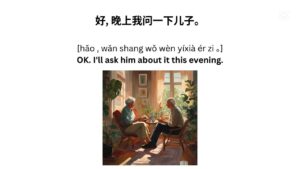
Learning Chinese HSK 2 Lesson 4-2: How to emphasize the agent of action in Chinese (cont.)
I. Emphasize the agent of action in Chinese with “是。。。的”。 (Cont.) 1. Conversation A:早上 有你一个电话。 [...]
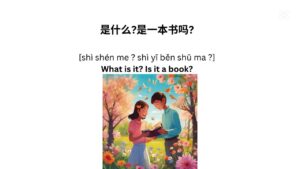
Learning Chinese HSK 2 Lesson 4-1: How to emphasize the agent of action in Chinese
I. Emphasize the agent of action in Chinese with “是。。。的”。 1. Conversation A:生日快乐!这是送给你的! [shēng rì [...]

Learning Chinese HSK 2 Lesson 3-4: talking about position in Chinese
IV. Express position in Chinese with 边 (bian) 1. Conversation A:你看见我的杯子了吗? [nǐ kàn jiàn wǒ [...]

Learning Chinese HSK 2 Lesson 3-3: How to say really, truly, indeed in Chinese
III. Express really; truly; indeed in Chinese with 真 [zhēn] 1. Conversation A: 这是谁的房间? [zhè [...]
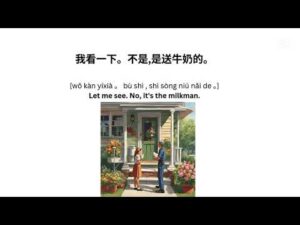
Learning Chinese HSK 2 Lesson 3-2: express short action in Chinese
II. Express short action in Chinese with “一下” 1. Conversation A:这是今天早上的报纸吗? [zhè shì jīn tiān [...]
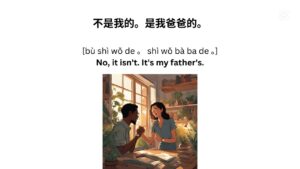
Learning Chinese HSK 2 Lesson 3-1: How adjective, verb, noun can function as a noun in Chinese
I. Adjective, verb, noun can function as a noun in Chinese by adding “的”, it [...]
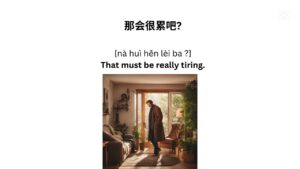
Learning Chinese HSK 2 Lession 2-4: How to say every in Chinese
IV. Say every in Chinese with 每(měi) 1. Conversation A:张老师星期六也不休息啊? [Zhāng lǎo shī xīng qī [...]
Learning Chinese HSK 2 Lession 2-3: Asking about degree in Chinese
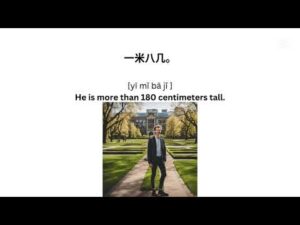
III. Asking about degree in Chinese with 多 (duō) 1. Conversation A:大卫今年多大? [dà wèi jīn [...]
Learning Chinese HSK 2 Lession 2-2: how to say feel better in Chinese
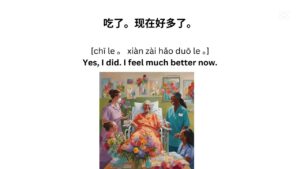
II. Say feel better in Chinese with 好多了. 1. Conversation A:吃药了吗?现在身体怎么样? [chī yào le ma [...]
 Shop Sách học Tiếng Trung tại Shopee